Packing: Carry What Earns Its Place
An overloaded motorcycle feels vague at the handlebars, wallows over mid-corner bumps, and demands longer braking distances on wet downhill hairpins. Even more frustrating is the daily ritual of unstrapping four separate dry bags on a rainy hotel pavement just to locate a toothbrush or a spare pair of dry socks.
Whether your trip lasts four days or four weeks, your clothing volume should remain virtually identical: three days of merino base layers washed in the sink on rotation, a modular riding shell system, and a compact tool and tyre kit tailored exclusively to the fasteners on your own machine.
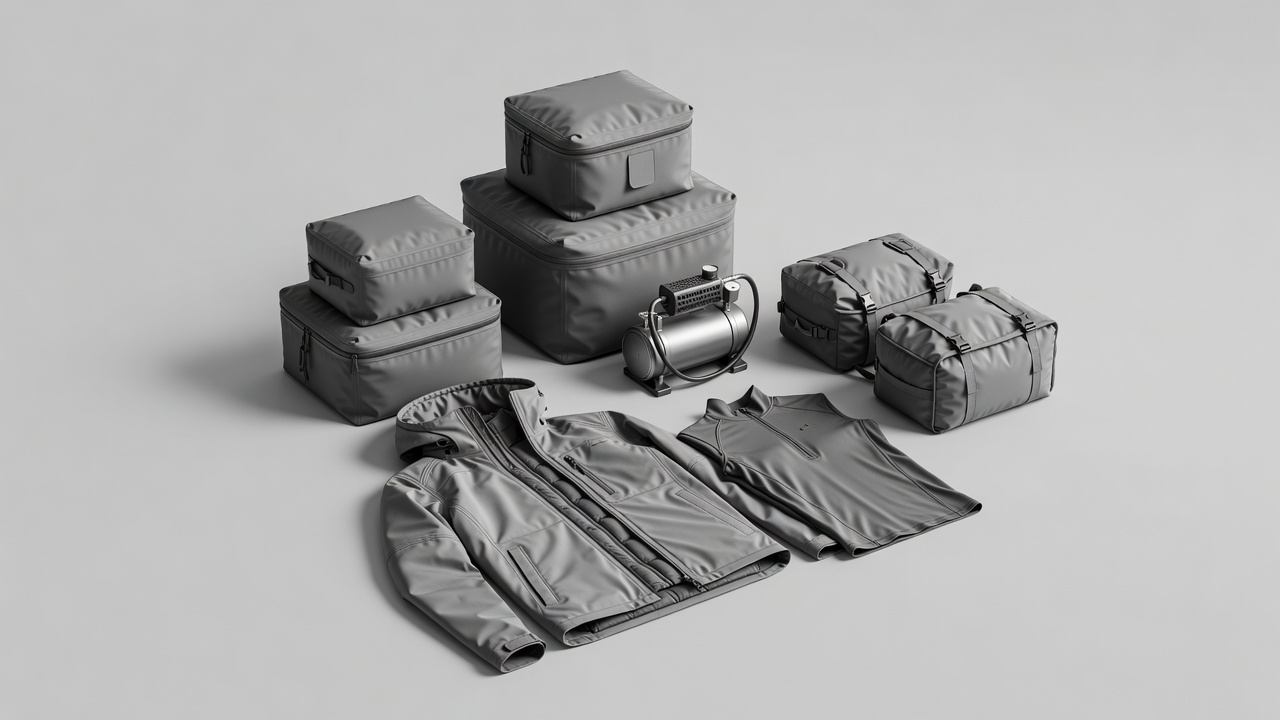
Pack-by-Purpose Allocation System
Assign every piece of equipment to a fixed compartment based on two strict criteria: mass density and access frequency. Never mix evening hotel clothing with roadside rain gear or greasy chain maintenance tools.
Cockpit & Immediate Reach
Items required while seated or during a two-minute roadside pull-out:
- Waterproof paper route card & permanent marker
- Visor microfibre cloth & small spray bottle
- Spare ear plugs in a tethered case
- Insulated waterproof gloves & windproof neck gaiter
- Sunglasses, lip balm, and toll transponder / payment card
- Short charging leads & 10,000 mAh power bank
Dense Mechanical & Recovery Gear
Packed lowest and furthest forward against the pillion footrest hangers:
- Tubeless sticky-string plug kit, reamer, and 12V mini compressor
- Bike-specific sockets/Torx keys for both axles, fairing, and battery
- Nitrile gloves, safety wire, zip-ties, and self-amalgamating silicone tape
- Spare blade fuses, master link (if applicable), and compact jump pack
- 500 ml emergency drinking water pouch & high-calorie ration bar
Overnight Room & Off-Bike Kit
One 15-litre waterproof compression cube that lifts straight into your lodging:
- 3× Merino wool t-shirts, underwear, and riding socks
- 1× Lightweight nylon travel trousers & packable trail shoes
- Compact wash kit, travel laundry soap leaves, and braided sink clothesline
- Multi-port GaN wall charger for helmet comms, phone, and watch
The Four-Part Weather Layering Matrix
Bulky all-in-one winter jackets cook you in 26°C valley traffic, while mesh summer jackets become hazardous when climbing into a 4°C alpine hailstorm. Instead, separate abrasion protection from thermal insulation and waterproofing:
- 1. Next-to-Skin Base (Moisture Control): Fine-gauge merino wool or hydrophobic polypropylene long-sleeve top and leggings. Never wear cotton under technical riding gear; cotton retains sweat and chills your core the moment you climb in altitude.
- 2. Mid-Layer Insulation (Trapped Air): A compressible synthetic down puff jacket or wind-blocking grid fleece that doubles as your evening jacket off the bike. Synthetic insulation retains warmth even if damp and packs down to the size of a grapefruit.
- 3. Abrasion Chassis (Impact & Airflow): CE AA or AAA certified textile or perforated leather suit with CE Level 2 limb and back armour and direct-to-body zippered vents.
- 4. Outer Weather Shell (Wind & Rain Barrier): Either a laminated Gore-Tex/membrane outer suit or a separate high-visibility stretch rain suit worn *over* your protective jacket. An external rain shell prevents your protective jacket from wetting out and cooling you via evaporative heat loss at 65 mph.
"Put your rain shell or thermal mid-layer on the first time the thought crosses your mind. Waiting twenty minutes until you are already shivering costs an hour of body heat recovery." — Cold-Weather Riding Protocol
Before departure, lay every packed item on your garage floor and remove anything justified solely by the phrase "just in case"—except first aid, rain protection, and tyre repair. Next, see how to select and verify end-of-day stops in our Overnight Touring dispatch.